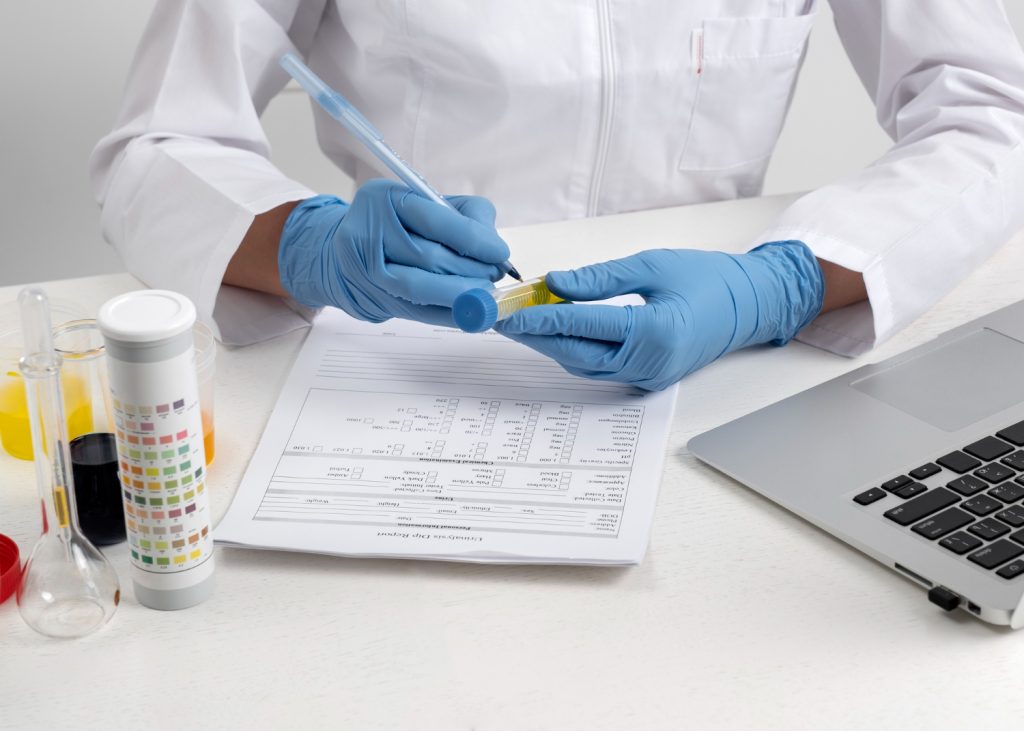
On September 2, 2025, Quest Diagnostics published its annual Drug Testing Index — the most authoritative snapshot of drug use in the US workforce, drawn from over 8 million drug tests conducted across general workforce and federally mandated safety-sensitive populations.
The headline finding was not subtle. Fentanyl positivity in random workplace drug tests was 707% higher than in pre-employment screens — 1.13% versus 0.14%. For an employer running a pre-employment-only testing programme, that gap represents a population of employees using one of the most potent and dangerous opioids in circulation, passing the pre-hire screen, and remaining entirely invisible to the programme for the duration of their employment.
The implications for workplace safety, programme design, and legal liability are significant. And yet, as of early 2026, the majority of private employers outside regulated industries have not added fentanyl to their testing panels and have not expanded beyond pre-employment screening.
Why the Fentanyl Gap Is Different From Other Substances
For most substances, the pattern of positivity rates between pre-employment and random testing is relatively consistent. Marijuana, for example, showed a 42% lower positivity rate in random tests compared to pre-employment tests over the past five years — meaning people moderate or cease use when they know they’re about to be screened, and the pattern roughly holds afterward. The pre-employment screen gives a reasonable baseline read on the population.
Fentanyl’s pattern is the inverse. Over the past five years, fentanyl positivity in random testing has averaged 400% higher than in pre-employment testing. In the most recent data, that gap has widened to 707%.
The explanation that fits the data: employees who use fentanyl are better at timing abstinence for a known, anticipated pre-employment test — fentanyl clears the system more quickly than many other substances — but resume use once employed. The pre-employment screen catches the relatively small subset who are using at the time of the test. The ongoing workforce population using fentanyl is substantially larger.
This matters beyond the individual safety risk. Emergency medical services were activated over 12,600 times to respond to potential opioid overdoses occurring in workplace settings in 2024. The National Safety Council has documented that in the workplace, overdoses account for 10% of all deaths on the job. The crisis is not happening outside work hours and outside work premises. It is happening in warehouses, on construction sites, in vehicle cabins, in food processing plants.
The industries with the highest substance use rates in the workforce — food preparation and construction — are precisely the industries where impairment creates the most acute safety risk for co-workers, members of the public, and the employer’s insurance and legal position.
What the Regulatory Response Has Been
The federal response to fentanyl’s emergence in workplace drug testing data has been deliberate and is still being implemented.
On January 15, 2025, the Department of Health and Human Services published a new rule requiring all federal workplace drug testing panels to include fentanyl and its primary metabolite, norfentanyl. This update took effect on July 7, 2025, and applies to federal agencies and contractors.
The Department of Transportation has proposed adding fentanyl and norfentanyl to its drug testing panels for private transportation employees in trucking, aviation, rail, transit, pipeline, and maritime industries, with a final rule expected to take effect in early 2026.
Both rules were triggered by the same underlying data: fentanyl is now a leading cause of workforce drug-related harm, and the existing standard five-panel test — covering amphetamines, cocaine, marijuana, opioids, and PCP — does not detect it. Fentanyl is a synthetic opioid, distinct from the natural and semi-synthetic opioids covered by the standard opioid panel. An employee testing negative on a standard panel can be using fentanyl regularly.
For private employers outside the federally regulated categories, adding fentanyl to the testing panel remains voluntary. The regulatory obligation does not yet apply. But the data that drove the regulatory change applies equally to every employer with a safety-sensitive workforce — and the negligent hiring and negligent retention liability exposure from knowingly operating a testing programme that cannot detect the most prevalent dangerous substance in the workforce is a question that employment attorneys are already being asked.
The Polysubstance Dimension
One of the more alarming findings in the Quest 2025 data is the polysubstance pattern among fentanyl-positive tests. Sixty percent of specimens positive for fentanyl in the US general workforce were also found to be positive for other drugs. About 22% of fentanyl-positive workforce drug tests were also positive for marijuana — a rate that has doubled since 2020, when only 10% of fentanyl positives were also positive for marijuana. A large percentage of fentanyl positives were also found to be positive for amphetamines — 16% in 2024 compared to 11% in 2020.
Polysubstance use changes the risk calculation significantly. The impairment effects of fentanyl combined with cannabis, or fentanyl combined with amphetamines, are not additive in a simple linear sense — they interact in ways that intensify impairment, unpredictability, and overdose risk. An employer whose testing programme detects cannabis but not fentanyl may be making safety-based employment decisions against employees who are using cannabis legally off-duty, while entirely missing the employees presenting the highest impairment risk.
This is one of the more profound absurdities of the current drug testing landscape: the substance most likely to create acute workplace safety risk is often not on the panel, while the substance with the most visible detection window and the clearest legal protection in many states is routinely causing employment decisions.
What the Cannabis Post-Accident Data Shows
Separate from the fentanyl story, the Quest data carries a finding about cannabis that deserves attention from employers who have been loosening their cannabis testing posture in response to legalisation.
Marijuana remains the most frequently detected substance, with positivity holding steady at 4.5% in the general US workforce year over year. Marijuana positivity following workplace accidents also remains high — post-accident positivity was 7.3% in 2024, just slightly below the record high of 7.5% in 2023.
Post-accident testing positivity is the most operationally significant figure in the dataset. It measures the rate at which employees involved in workplace accidents test positive — and 7.3% is a substantial number. The methodological caveat that matters: a positive cannabis test does not prove that cannabis caused or contributed to the accident, because standard metabolite testing cannot determine current impairment. But 7.3% post-accident positivity is a signal that employers with safety-sensitive roles cannot ignore when designing their testing programmes.
The response cannot simply be “test more aggressively for cannabis” — for reasons explored in the second blog this week, that creates its own legal and policy problems. But eliminating cannabis testing in safety-sensitive roles, or failing to investigate cannabis positivity in post-accident situations, is equally indefensible. The appropriate response is a testing methodology and policy framework sophisticated enough to distinguish between evidence of past use and evidence of current impairment.
For-Cause Testing: The Underused Tool
One of the most striking findings in the Quest data is the for-cause testing positivity rate. For-cause testing, used when employers have reasonable suspicion of substance use, showed a 33.1% positivity rate in 2024 — meaning roughly one in three employees tested because a supervisor had reasonable suspicion of impairment returned a positive result.
That number has two implications. First, the supervisors triggering for-cause tests are doing so with genuine substance behind their suspicion — a 33% positivity rate indicates they are identifying real cases, not acting on vague hunches. Second, and more tellingly, a 33% positivity rate suggests that impaired employees are present in workforces that do not have robust random or ongoing testing programmes. The for-cause trigger only fires when a supervisor notices something. Employees whose impairment is functional but not immediately visible — consistent fentanyl users who have developed tolerance, for example — may never trigger a for-cause test.
The data makes a compelling case for multi-layered testing programmes that combine pre-employment, random, post-accident, and reasonable-suspicion testing rather than relying on pre-employment screens as the primary or sole detection mechanism. The employees creating the most serious ongoing risk are precisely those least likely to be caught by a one-time pre-employment screen.
The Testing Methodology Question
Underlying all of these data points is a methodological challenge that the industry is only beginning to resolve.
The standard urine test is effective for detecting recent use of most substances. For cannabis specifically, it detects metabolites that remain in the body for up to four weeks after last use — making it a poor proxy for current impairment but a reliable indicator of recent use. For fentanyl, urine testing is effective but only if fentanyl is actually on the panel. For real-time impairment across substances, no test currently certified for DOT use can provide a reliable impairment determination.
Oral fluid testing offers a shorter detection window — typically 24 to 48 hours — making it a better proxy for recent and potentially current use. The DOT has proposed aligning with the HHS regulation that established a protocol for saliva testing, but DOT-regulated employers cannot implement oral fluid testing until HHS certifies two laboratories to complete those tests. As of January 2026, that certification had not yet been issued.
For private employers not subject to DOT regulation, oral fluid testing is available now and is increasingly relevant in cannabis-legal states where metabolite-based adverse action is restricted. California’s AB 2188 specifically directs employers toward test methods that detect psychoactive components rather than non-psychoactive metabolites — oral fluid testing is the currently available tool for that purpose.
The employers who will manage this transition best are those investing now in understanding what their current testing methodology detects, what it doesn’t, and what it legally can and cannot be used for in the jurisdictions where they operate.
AMS Inform provides background verification and workforce screening services across 160+ countries. For organisations reviewing their drug testing and workforce screening programmes, speak to our team at AMSinform.com.