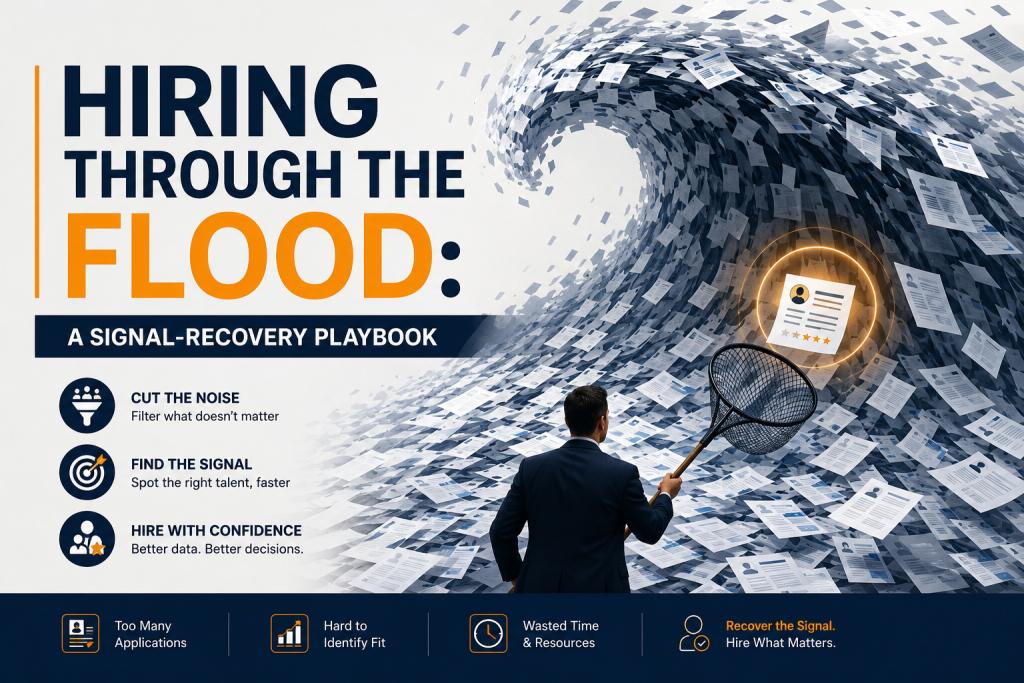
Most screening playbooks begin with how. This one has to begin with whether, because social media review is the one check where the strongest compliance move available is often the decision not to run it.
What follows is the full decision architecture: when a review is justified, how to design one that survives legal scrutiny, and the handling disciplines that keep a legitimate look from curdling into a liability. The organising principle throughout is the one the landscape piece established: the danger is rarely what you are looking for. It is what you see, who sees it, and what you cannot prove afterwards.
Decide Whether, Role by Role
Resist the universal policy in either direction. The honest question is per role: does this position carry risks that public online conduct would genuinely illuminate, which credentials, references, and adverse media would not?
For most roles, the answer is no, and the right policy is a written prohibition on ad hoc candidate searches, which closes the shadow practice rather than pretending it doesn’t exist. The yes cases cluster where conduct is the job: public-facing and brand-carrying roles, positions of trust over vulnerable people, and senior appointments, where this series has already argued the public record belongs in the file. Even there, jurisdictions differ: European proportionality doctrine and India’s DPDP consent-and-minimisation logic mean the same review that is routine in one market needs a demonstrable justification in another. Write the role list down, with the rationale. “We check when the manager feels like it” is the indefensible middle this playbook exists to eliminate.
Write the Criteria Before Anyone Looks
If a role qualifies, the next step happens before any browser opens: define, in writing, exactly what the review is for.
The defensible criteria are behavioural and job-relevant: credible threats or violence, harassment or demonstrably discriminatory conduct, illegal activity, breaches of confidentiality such as leaking a former employer’s information, and material contradictions of the candidate’s application. The exclusions matter as much, and belong in the same document: protected characteristics of every kind, lawful off-duty conduct, political and religious expression, union activity and anything resembling protected concerted speech about workplace conditions. The test for every criterion is one line: does this describe conduct that predicts a job risk, or a characteristic of a person? Behaviours, never beliefs. A reviewer holding this document is running a check. A reviewer without it is browsing, with the company’s name attached.
Build the Firewall
Now the structural control that does more work than every other safeguard combined: the person who reviews is never the person who decides.
A trained reviewer, internal but insulated, or a specialist vendor, examines the public record against the written criteria and passes forward only job-relevant findings, with protected information redacted and everything else omitted. The hiring team never sees raw profiles, never scrolls, and can honestly testify to deciding on a filtered, criteria-bound report. This single structure defuses the imputed-knowledge problem at its root: what the decision-maker never saw cannot taint the decision. It also produces, as a by-product, the thing casual screening never has: a record of what was reviewed, against what standard, by whom, on what date.
If a Vendor Runs It, Run the Full Machinery
Outsourcing the review is usually the right call, and it comes with two sets of homework.
The first is the FCRA, in jurisdictions where it reaches: a third-party social media report on a candidate can be a consumer report, which means standalone disclosure that names social media screening, written authorisation, pre-adverse action notice with the report attached, a real dispute window, and a final notice. Bolt the social report into the same adverse-action workflow you use for criminal checks, because in the statute’s eyes they are siblings, and litigation is already testing how far that family extends to AI-generated evaluations.
The second is vendor diligence with teeth, because the emerging rule across California’s automated-decision regulations, Illinois’s discrimination amendments, and New York City’s audit mandate is that the tool’s bias is your liability. Ask for the bias and disparate-impact audit results, in writing. Ask whether and how AI is used, what the misidentification safeguards are, and what accuracy testing supports the personality inferences if the tool makes them, then think hard about whether you want personality inferences at all. A vendor who cannot answer these questions crisply is not removing your risk. They are laundering it back to you with an invoice.
Confirm the Account, Touch Only Public Ground
Two field disciplines protect the review itself.
First, attribution. Common names, duplicate profiles, and impersonation accounts mean the single most embarrassing failure in this domain is judging the wrong person’s posts. Require positive confirmation that an account belongs to the candidate, through corroborating identifiers, cross-references, or simply asking, before any finding attaches to it, and treat unconfirmed attribution as no finding at all.
Second, boundaries. Public content only. No requests for credentials, which more than thirty states prohibit and decency prohibits everywhere. No pretext friending, no borrowed logins, no reaching into private groups. And capture what is reviewed with dated documentation, because feeds change and deletions happen, and a finding you cannot reproduce is a finding you cannot rely on. Then hold what you capture lightly: scraped profile data is breach liability in storage, so collect the minimum, retain it only as long as the decision requires, and dispose of it on schedule.
Give the Candidate the Conversation
When the review surfaces something material, the process owes the candidate a step most employers skip: the chance to explain before anyone decides.
The reasons are practical before they are principled. Old posts lack context. Satire reads badly in screenshots. Accounts get hacked, and, as the attribution problem proves, sometimes the person in the finding is a different person entirely. A structured conversation, aligned with the pre-adverse-action window where the FCRA applies, catches all of these before they become wrongful rejections, and it disciplines the organisation’s own judgement: findings that cannot survive being said aloud to the candidate were probably not job-relevant to begin with. Weigh what remains with proportion, recency, severity, pattern against isolated lapse, exactly as a mature programme weighs a criminal record.
Keep It Consistent, Minimal, and Audited
The last layer is the one regulators and plaintiffs check first: uniformity.
Same roles, same review, same depth, every time, with the criteria document versioned and the reviewer’s report on file for each candidate in scope. Then audit your own outcomes periodically for disparate impact, whether or not any local law yet requires it, because a review process that quietly screens out one demographic is a lawsuit doing warm-up laps, and you want to find it before opposing counsel does. Where the programme spans borders, map it against each jurisdiction’s rules, the way this series has now recommended for compensation questions and right-to-work checks alike: one global principle, locally lawful execution, in writing.
A Window, Not a Verdict
Done as designed here, a social media review becomes something narrow and honest: a criteria-bound look at public conduct, for the small set of roles where conduct is the job, insulated from the people it could prejudice, documented end to end, with the candidate given the dignity of a reply.
That is a window, and windows have frames. What this playbook refuses to produce is the other thing, the dossier: the unbounded scroll through a human being’s recorded life, assembled by the person about to judge them, on criteria invented after the fact. Seventy percent of employers are looking. The durable advantage belongs to the ones who can show exactly what they looked at, why it mattered to the job, and everything they deliberately declined to see.