Somewhere in your organisation, in the next few days, a hiring manager will shortlist a candidate and then do the natural thing: open a browser tab and search the name. A profile will appear. Scrolling will begin.
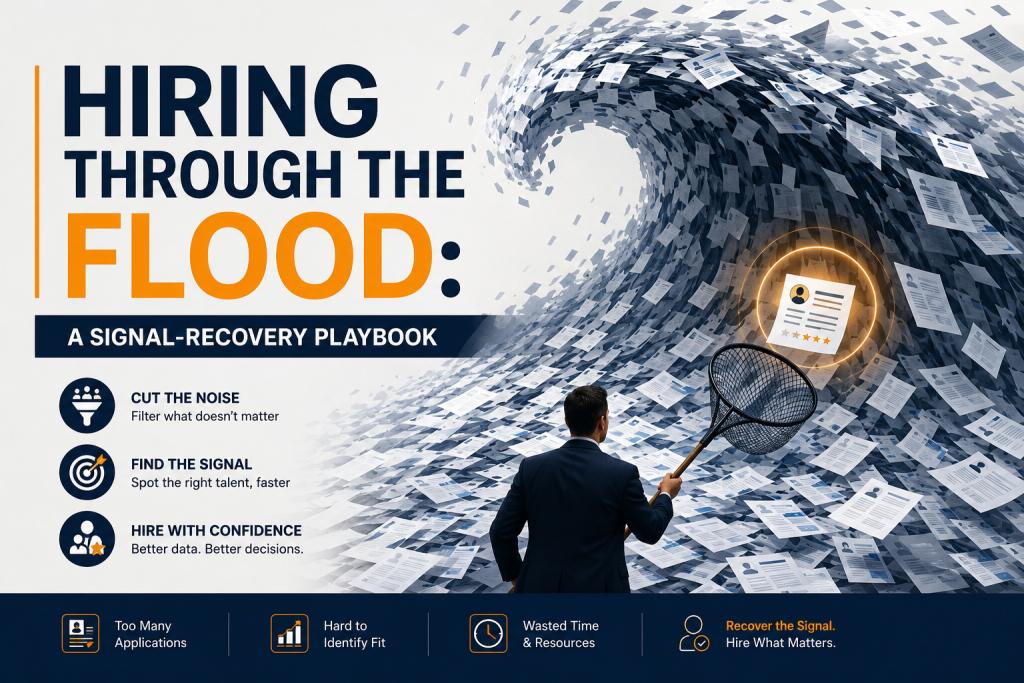
This is, by adoption, the most popular background check in the world. Roughly 70 percent of employers now review candidates’ social media as part of screening. It is also, by any honest audit, the least governed: no written criteria, no consistent application, no record of what was viewed, no awareness that in some configurations it triggers the same federal machinery as a criminal record check. Most checks in hiring are formal processes occasionally done badly. This one is an informal habit occasionally done properly.
For years, that gap survived on obscurity. It is not surviving 2026. AI tools now industrialise the scroll, a wave of state laws attaches liability to the algorithms, and the first lawsuits treating automated screening reports as regulated consumer reports are live in court. The most casual check in hiring has quietly become one of its most consequential, and it deserves the examination it has never had.
How Scrolling Became Screening
The practice grew the way shadow processes always grow: because it was free, felt revealing, and nobody had to ask permission.
A CV is a curated claim; a feed feels like the person. As one candidate-side guide puts it, your online life has become an open-book interview, conducted long before anyone shakes your hand. And the incentive sharpened as public conduct became a business risk in its own right: in an era when an employee’s decade-old posts can resurface and take a brand’s afternoon with them, reviewing a candidate’s public record feels less like curiosity and more like diligence. This series made a version of that argument itself, in its piece on executive vetting, and promised to return to the guardrails. This is that return.
What changed the stakes is scale. The casual search has been productised. Current tools scan candidates’ public posts with natural language processing, analyse sentiment and language patterns, and generate personality assessments predicting traits like teamwork, adaptability, and leadership potential. The pitch, as employment lawyers at Fisher Phillips summarise it, is seductive: the candidate’s “real” personality, beyond the résumé, at machine speed. The problem is everything that rides along with it.
What the Casual Look Actually Costs
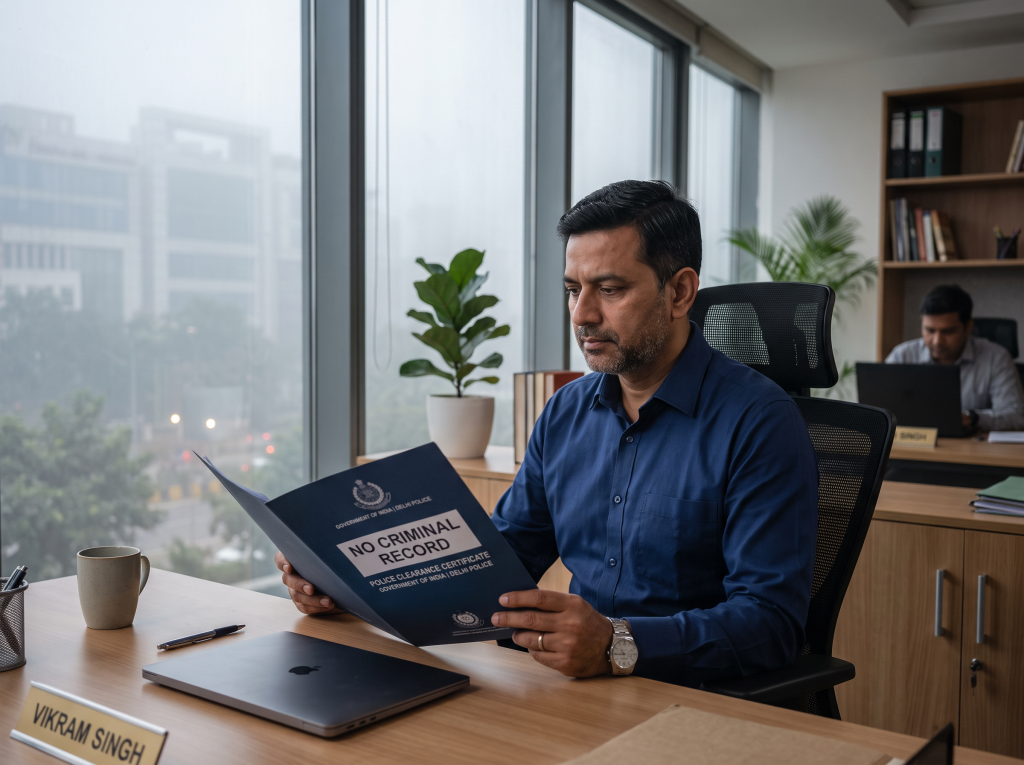
Start with the version most organisations actually run: the hiring manager, the browser tab, the scroll. Its legal problem is not what the manager is looking for. It is what the feed shows them anyway.
A few minutes in almost anyone’s profile reveals information employment law spent sixty years fencing off from hiring decisions: religion, likely age, pregnancy, disability, sexual orientation, political affiliation, union activity. Once a decision-maker has seen these, knowledge is imputed, and every subsequent adverse decision carries the question of whether it played a part. The rejection may genuinely have been about “communication style.” Proving that, after the file shows the reviewer saw a pregnancy announcement, is another matter. This is why compliance practitioners state the rule so bluntly: the decision-maker should never personally search a candidate’s social media. Not because looking is illegal, but because seeing is irreversible.
Three further exposures ride with the casual version. Inconsistency: when only some candidates get scrolled, the selection of who gets scrutinised becomes its own discrimination pattern. Misidentification: common names, duplicate profiles, and impersonation accounts mean employers routinely review the wrong person’s content, and an adverse decision built on someone else’s posts is indefensible in every direction. And the statutory tripwires: more than thirty states bar demanding candidates’ login credentials, several protect lawful off-duty conduct outright, whistleblower protections can attach to the very posts being judged, and complaining online about wages or working conditions with colleagues can constitute protected concerted activity under federal labour law. The feed is not neutral terrain. It is the most legally mined surface in hiring, and most organisations walk it in slippers.
The FCRA Trap Nobody Sees Coming
Now the intersection that legal commentators describe as almost universally misunderstood. The instinctive fix for the seeing problem is to outsource the looking: hire a vendor, receive a tidy “social media report.” Done properly, that is exactly right. Done casually, it walks the employer into federal law.
When a third party compiles information on a candidate for employment purposes, the report can constitute a consumer report under the Fair Credit Reporting Act, which means the full machinery applies: standalone disclosure, written authorisation, pre-adverse action notice with a copy of the report, a genuine dispute window, and accuracy duties on the compiler. Fisher Phillips lists the obligations without hedging. The employer who quietly commissions a social scan and rejects a candidate on it has, in the FCRA’s eyes, skipped the same steps it would never skip on a criminal check.
And the theory is expanding. In January, two applicants sued the AI recruiting platform Eightfold in California, alleging its screening system amounted to hidden credit reports assembled without the certifications and compliance the FCRA demands of consumer reporting agencies. Whatever its outcome, the suit marks the direction: automated evaluation of candidates from aggregated data is being argued into the FCRA’s jurisdiction, and social scanning tools sit squarely in the blast radius.
Then AI Arrived, and the Law Followed
The automation of the scroll solved the seeing problem, a machine can theoretically filter protected content before a human looks, and created a bigger one: bias at scale, now with statutes attached.
The mechanism is well documented. Models trained on biased data reproduce the bias, flagging candidates from particular backgrounds at different rates, and as one guide puts it, automated screening doesn’t eliminate discrimination so much as automate it. One screening-industry benchmark adds a subtler failure: AI can treat consistency as truth, so a fabricated story repeated smoothly across platforms reads as reassurance, meaning the tools can validate fraud rather than expose it, while their name-matching generates false positives against the innocent.
The law has stopped waiting. Illinois amended its Human Rights Act, effective this January, to prohibit AI use that discriminates against protected classes in employment. California’s regulations on automated-decision systems in hiring took effect last autumn and hold employers liable for discrimination their tools cause. New York City has required independent bias audits of automated hiring tools since 2023. Colorado’s broader AI Act, repeatedly delayed, is now slated for 2027, and the state-by-state map keeps filling. The through-line, which courts are already testing in the Workday class action, where a judge allowed claims to proceed on the theory that the platform acted as agent for the hundred-plus employers using its screening, is uncomfortable for buyers: the vendor’s algorithm is the employer’s liability. “We didn’t know the tool used AI” is not a defence anyone should plan around, and management-side counsel now advise pre-deployment bias audits and vendor testing documentation as baseline hygiene.
Elsewhere, the Question Is Whether You May Look at All
Outside the United States, the framing shifts from how to whether.
European data protection doctrine treats a candidate’s social profile as personal data whose processing needs a lawful basis, necessity, and proportionality, and regulators have long signalled that routine trawling of candidates’ private lives fails that test for most roles. India’s DPDP regime pushes the same direction: purpose-limited consent, data minimisation, and retention discipline sit awkwardly beside a folder of screenshots collected because a manager was curious. For multinationals, that makes social screening the same shape as the compensation question this series examined recently: a practice that is casual habit in one market and regulatory exposure in another, unsurvivable as a single global default.
One boundary is worth drawing precisely, because the terms blur: this is not adverse media screening. Adverse media, covered in these pages before, examines news and public records for risk signals, a structured discipline with established criteria. Social screening examines the candidate’s own expression and conduct. The first asks what the world has recorded about a person. The second asks what a person has said, and that is exactly why the law guards it more jealously.
Look With a Process, or Don’t Look
Strip the landscape to its decision, and only two defensible positions remain.
The first is the deliberate no: for most roles, conclude that a structured interview, verified credentials, and adverse media where warranted answer everything a feed would, without the exposure, and prohibit freelance scrolling by policy. The second is the professional yes: a documented, firewalled, criteria-driven review, run identically for every candidate in scope, with the FCRA machinery where a vendor is involved and audit trails throughout, the architecture the companion playbook sets out.
What is no longer defensible is the position nearly everyone occupies: official policy silent, actual practice universal, hiring managers conducting unrecorded reviews of the most legally sensitive information in existence, on the theory that what happens in a browser tab stays there. Seventy percent of employers are running this check. The ones who will still be comfortable in a deposition are the ones who decided, in writing, how.